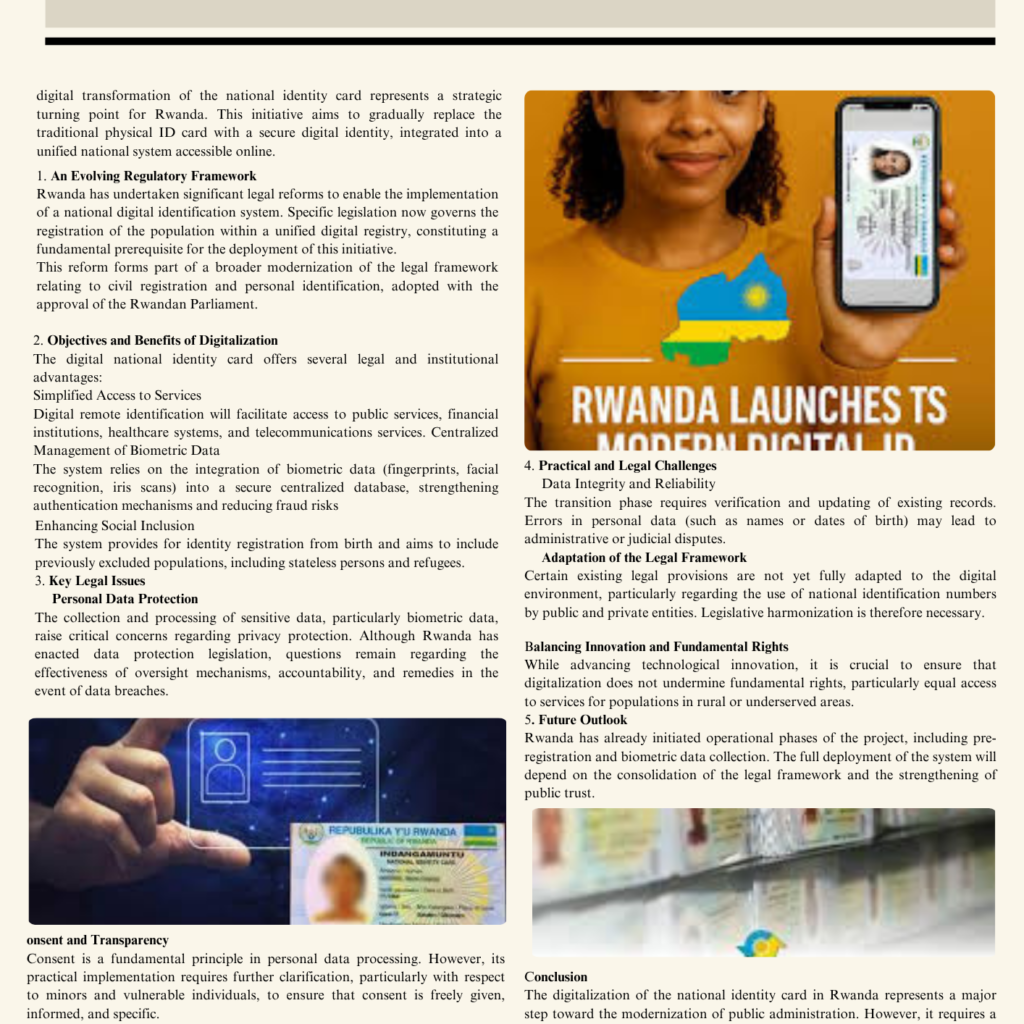
digital transformation of the national identity card represents a strategic turning point for Rwanda. This initiative aims to gradually replace the traditional physical ID card with a secure digital identity, integrated into a unified national system accessible online.
1. An Evolving Regulatory Framework
Rwanda has undertaken significant legal reforms to enable the implementation of a national digital identification system. Specific legislation now governs the registration of the population within a unified digital registry, constituting a fundamental prerequisite for the deployment of this initiative.
This reform forms part of a broader modernization of the legal framework relating to civil registration and personal identification, adopted with the approval of the Rwandan Parliament.
2. Objectives and Benefits of Digitalization
The digital national identity card offers several legal and institutional advantages:
Simplified Access to Services
Digital remote identification will facilitate access to public services, financial institutions, healthcare systems, and telecommunications services. Centralized Management of Biometric Data
The system relies on the integration of biometric data (fingerprints, facial recognition, iris scans) into a secure centralized database, strengthening authentication mechanisms and reducing fraud risks
Enhancing Social Inclusion
The system provides for identity registration from birth and aims to include previously excluded populations, including stateless persons and refugees.
3. Key Legal Issues
Personal Data Protection
The collection and processing of sensitive data, particularly biometric data, raise critical concerns regarding privacy protection. Although Rwanda has enacted data protection legislation, questions remain regarding the effectiveness of oversight mechanisms, accountability, and remedies in the event of data breaches.
Consent and Transparency
Consent is a fundamental principle in personal data processing. However, its practical implementation requires further clarification, particularly with respect to minors and vulnerable individuals, to ensure that consent is freely given, informed, and specific.
Security and Cybersecurity
Digital identity systems are inherently exposed to risks such as cyberattacks, identity theft, and data breaches. It is therefore essential for the legal framework to establish strict security obligations, as well as effective remedies for affected individuals.
4. Practical and Legal Challenges
Data Integrity and Reliability
The transition phase requires verification and updating of existing records. Errors in personal data (such as names or dates of birth) may lead to administrative or judicial disputes.
Adaptation of the Legal Framework
Certain existing legal provisions are not yet fully adapted to the digital environment, particularly regarding the use of national identification numbers by public and private entities. Legislative harmonization is therefore necessary.
Balancing Innovation and Fundamental Rights
While advancing technological innovation, it is crucial to ensure that digitalization does not undermine fundamental rights, particularly equal access to services for populations in rural or underserved areas.
5. Future Outlook
Rwanda has already initiated operational phases of the project, including pre-registration and biometric data collection. The full deployment of the system will depend on the consolidation of the legal framework and the strengthening of public trust.
Conclusion
The digitalization of the national identity card in Rwanda represents a major step toward the modernization of public administration. However, it requires a robust legal framework, particularly in terms of personal data protection, cybersecurity, and the safeguarding of fundamental rights.
The success of this transformation will depend not only on the reliability of technological infrastructure but also on the ability of the legal system to establish a clear, protective, and forward-looking regulatory environment.